
Daily home care and the right product selection prevent many dental emergencies. Tooth root abscesses, fractured teeth, and even broken jaws are all consequences of poor dental care or chewing on the wrong thing, and a daily dental care routine that uses vet-trusted options can help keep your pet from needing urgent oral surgery. Brushing every day is best, because the bristles disrupt plaque at the gumline, where periodontal disease and the abscessed roots that follow get their start. Wipes, gels, powders, sprays, chews, and dental diets can all play a part in keeping your pet's mouth healthy. Fractured teeth are a separate problem, and they come down to what your pet is allowed to chew.
Memorial Villages Animal Hospital in Houston takes full-mouth X-rays under anesthesia as part of a complete oral exam, which is how a cracked root, a tooth root abscess, or bone loss from chronic infection show up. Our dental care for dogs and cats covers cleanings, imaging, extractions, pain control, and honest guidance on which chews are safe and what products are worth your money. You can schedule a dental exam any time you want that mouth checked, or are ready to talk about what products can help prevent a dental emergency.
What Home Dental Care Can and Can't Do
- Most dental emergencies, from abscessed roots to fractured teeth to broken jaws, grow out of everyday plaque and bad chew choices, which makes home care genuine emergency prevention.
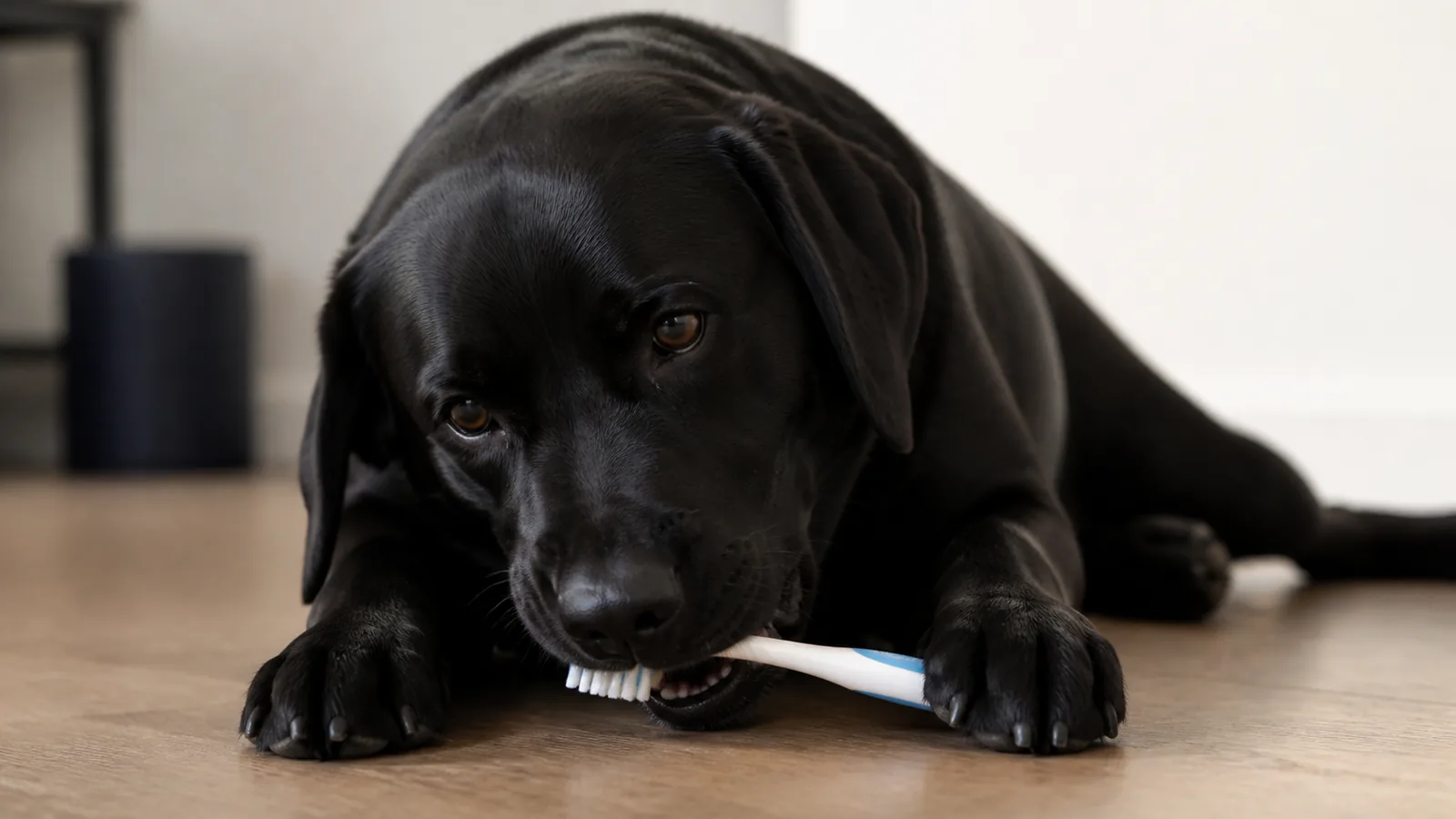
- A toothbrush remains the strongest tool in the house, and daily or every-other-day sessions beat an occasional scrub.
- Combinations outperform single products, so a brush plus a chew, or a wipe plus a water additive, does more than any one tool alone.
- Hardened tartar and disease under the gumline are beyond any home product, and that's the job a cleaning under anesthesia does.
How Does Daily Home Care Actually Prevent an Emergency?
Most dental emergencies are the last chapter of a slow story. An abscessed root began as plaque nobody disrupted, a broken jaw began as bone quietly thinned by years of periodontal disease, and a fractured tooth began with the wrong chew. Daily home care and smart shopping interrupt all three stories while they're still cheap to change.
- Tooth root abscesses: By the time a tooth root abscess announces itself as swelling under an eye or a pet who suddenly won't chew, infection has been working at that root for months. Daily plaque control at the gumline keeps bacteria from ever reaching the root, and regular exams catch the tooth that's headed there before it ruptures into an urgent visit.
- Jaw fractures: Advanced periodontal disease dissolves the bone of the lower jaw, and in small dogs enough bone can vanish that a mandibular fracture happens during an ordinary meal or a gentle game of tug. Stopping that bone loss with home care and timely cleanings is what prevents a broken jaw, because once the bone is gone, no product brings it back.
- Fractured teeth: These get prevented in the store aisle rather than at the bathroom sink. Skipping antlers, bones, hooves, and hard nylon removes the most common cause of a cracked tooth, and the thumbnail test below sorts safe from dangerous in five seconds.
A steady routine built from vet-trusted products, safe chews, and regular exams heads off most of the urgent oral surgery we perform.
Why Does a Clean Mouth Get Dirty Again So Fast?
When saliva mixes with food particles and bacteria, it forms a sticky substance called plaque. Plaque starts rebuilding on a clean tooth almost immediately and hardens into tartar in a matter of days. Early on this causes gingivitis: red, slightly puffy gum margins that bleed a bit when touched. That stage reverses with professional cleanings and home care.
Once bacteria work their way under the gumline, periodontal disease begins destroying the tissue and bone that hold teeth in place.Once the attachment between tooth and jaw breaks down, it is no longer reversible, and the bone loss builds silently for years. A mouth carrying constant infection also hands bacteria a steady route into the bloodstream, which is how the heart, kidneys, and liver end up in a conversation that started with bad breath.
A pet who gets regular dental care at home has less plaque and tartar and needs cleanings less often, and each one tends to stay a cleaning instead of turning into a series of extractions. That's the whole argument for home care: our preventive exams and dental care and what happens on your kitchen floor are two halves of one plan.
How Often Does Brushing Have to Happen to Count?
Daily is the target, and every other day still works. The piece most households get wrong is brushing frequency, because studies show that brushing even every other day cuts dental deposits measurably over several months, while a once-a-week schedule showed no significant benefit at all.
Bristles tear up the bacterial film at the gum margin before it mineralizes, and no enzyme, kibble shape, or additive fully reproduces that.
Where Do You Start With a Pet Who Wants No Part of It?
Start well short of the toothbrush and let your pet set the pace, because the introduction is usually the problem rather than the animal.
- Days 1 to 3: Touch the muzzle, lift a lip for one second, reward, stop.
- Days 4 to 7: Let your pet lick pet toothpaste off your finger, then run that finger along the outer gumline.
- Week two: Trade the finger for gauze or a finger brush on the canines and the big back teeth.
- Week three onward: Soft-bristled brush, a few teeth per session, building toward the whole outer arcade. Angle the bristles toward the gumline and work the outer surfaces.
Use pet toothpaste only, since human formulas carry fluoride, foaming detergents, and sometimes xylitol, and skip the home tartar scrapers entirely. Brushing a dog's teeth typically goes well with treats and training, while brushing a cat's teeth often takes a little more convincing. Use a smaller brush, shorter sessions, and an approach from the side. If the mouth already hurts, have us look before you start, and if you'd rather be shown than told, ask at your next visit and we'll run the first round with your pet in the room.
Do Dental Wipes Work as Well as Brushes?
Dental wipes can be a great alternative if a brush is out of the question. Compared side by side over several weeks, tools as simple as a nylon glove or a microfiber cloth reduced plaque and improved gum health nearly as well as a toothbrush, though none of them made a dent in tartar that had already hardened.
So a wipe isn't a consolation prize for the cat who bites the brush or the senior dog with a tender mouth. The trade-off is reach, since cloth and gloved fingers clean broad outer surfaces well but skate past the gum margin crevice and the teeth at the very back, where trouble usually begins. Add an enzymatic toothpaste to the cloth you are using, or use pre-made dental wipes that come with the right enzymes already added to them, for the best benefit.
Do Water Additives and Sprays Earn Their Shelf Space?
They do, with a condition attached. Used on their own with no mechanical care behind them, water additives didn't significantly reduce dental deposits, but paired with even modest brushing or a daily chew they outperformed that mechanical care by itself. Enzymatic dental sprays, gels, and powders break plaque down chemically and pay off most when layered on top of mechanical cleaning rather than used in place of it. Glucose oxidase and lactoperoxidase are the enzyme systems worth looking for.
The reason is the biofilm: mechanical action tears the film open so an antimicrobial can reach the gum tissue underneath, while an additive or spray facing an intact film can’t get through.
Which Chews Clean Teeth, and Which Ones Break Them?
The right chew is one of the better-supported habits in home care, with dental chews producing measurable drops in plaque, tartar, and gum inflammation over feeding dry food alone. The wrong one snaps a healthy tooth in a single bite.
Bones, antlers, hooves, and rock-hard nylon products are all dangerous chew items for the same reason: anything that won't give a little under your thumbnail is hard enough to fracture a tooth.
- The thumbnail test: Press a nail into the surface before you buy. No give, no chew.
- Size and texture: Match the product to the jaw in front of you, big enough that it can't be swallowed whole and soft enough to bend or flake apart.
- Supervision: Chewing is a watched activity. Large pieces get gulped, and a swallowed chunk can mean surgery rather than a bad night.
A cracked upper premolar often shows up as chewing on one side, dropping kibble, or swelling on the muzzle or under the eye. If you spot a broken tooth or swelling, call ahead and bring your pet in for urgent care, which we provide during our weekday hours.
Are Dental Diets Worth the Money?
Dental diets work along two tracks: tartar-control ingredients, and large, fibrous kibble engineered to break against the tooth instead of shattering under it. For a cat who refuses a brush entirely, that mechanical design is a real intervention rather than a packaging claim; in one feline trial it produced less gingivitis and tartar than the other approaches tested. Diets stretch the interval between cleanings without removing the need for them, and they're worth discussing for small breeds, seniors, and pets who already have periodontal disease on the record.
How Do You Tell Which Products Are Worth Buying?
Start with the seal on the package. The Veterinary Oral Health Council tests products against fixed standards for reducing plaque or tartar, so the seal on VOHC-accepted products means someone verified the claim instead of a marketing team writing it. Accepted items span chews, diets, gels, wipes, additives, and toothpastes, and our online pharmacy stocks vet-trusted dental products so you can skip the label detective work altogether.
| Tool | Best at | Where it falls short |
| Toothbrush | Disrupting plaque right at the gum margin | Needs near-daily consistency and a willing pet |
| Wipe, glove, or cloth | Nearly brush-level plaque control on outer surfaces | Misses the gumline crevice and the back teeth |
| Gel, spray, or powder | Chemical support between mechanical sessions | Modest results used by itself |
| Water additive | Making a light routine measurably better | Does little with no mechanical care behind it |
| Dental chew | Daily cleaning most dogs volunteer for | Hardness and calories both need watching |
| Dental diet | Steady mechanical cleaning for pets who refuse everything else | Cleans the teeth it contacts, not the whole mouth |
Bring whatever is already in your cabinet to your pet's next visit and we'll sort the useful from the decorative.
What Can a Dental Cleaning Do That Nothing at Home Can?
A cleaning under anesthesia reaches the part of the mouth a brush never gets to. We scale beneath the gum where infection lives, polish the enamel smooth so plaque has less to grip, image every root, stage the disease tooth by tooth, and treat what turns up while your pet is comfortable and still.
Much of what matters in a dental mouth sits out of sight during an awake exam. Our dental X-rays pick up resorptive lesions in cats, roots with infection, unerupted teeth in young dogs, and the quiet bone loss that turns one tooth into a source of chronic pain.
Anesthesia-free scaling gets marketed as the gentle alternative. Scraping a conscious pet's visible tooth surfaces reaches nothing below the gumline and allows no imaging at all, which is the trouble with anesthesia-free cleanings: the mouth looks noticeably cleaner while the disease doing the real damage keeps progressing.
Your Dental Home Care Questions, Answered
Is baking soda or coconut oil an okay substitute for pet toothpaste?
No on both counts. Baking soda is abrasive and alkaline, tastes bad enough to end the routine on day one, and can upset the stomach when swallowed in quantity. Coconut oil can cause diarrhea when swallowed, and has no meaningful effect on plaque. Stick with a pet toothpaste that has ingredients that work, and come in flavors pets love like chicken, seafood, and beef.
My dog's breath still smells even though I brush every night. What's going on?
Odor that survives consistent brushing usually points below the gumline, where a brush can't go: an abscessed root, deep periodontal pockets, or a fractured tooth sheltering bacteria. Lip fold infections, diet, and kidney or stomach disease can contribute too. Home care prevents new plaque, but it does nothing about established infection under the gum. A full oral exam with imaging sorts this out quickly, so please don't wait that one out.
When should puppies and kittens start dental home care?
As soon as they come home. Handling a young mouth every day sets you up for a lifetime of a cooperative pet who isn’t scared of the brush. Baby teeth are a low-stakes place to practice your technique since they fall out anyway.
Building a Home Dental Routine That Lasts
No single product carries this alone. A little mechanical care plus a little chemical support, done most days, protects a mouth better than any one product used perfectly. Plenty of Houston families feel too busy to brush every day, or have a pet that runs at the sight of a brush. When you're ready, schedule a dental consultation at Memorial Villages Animal Hospital and we'll look at your pet's mouth, talk honestly about what fits your household, and build the routine around what works for you and your pet.