
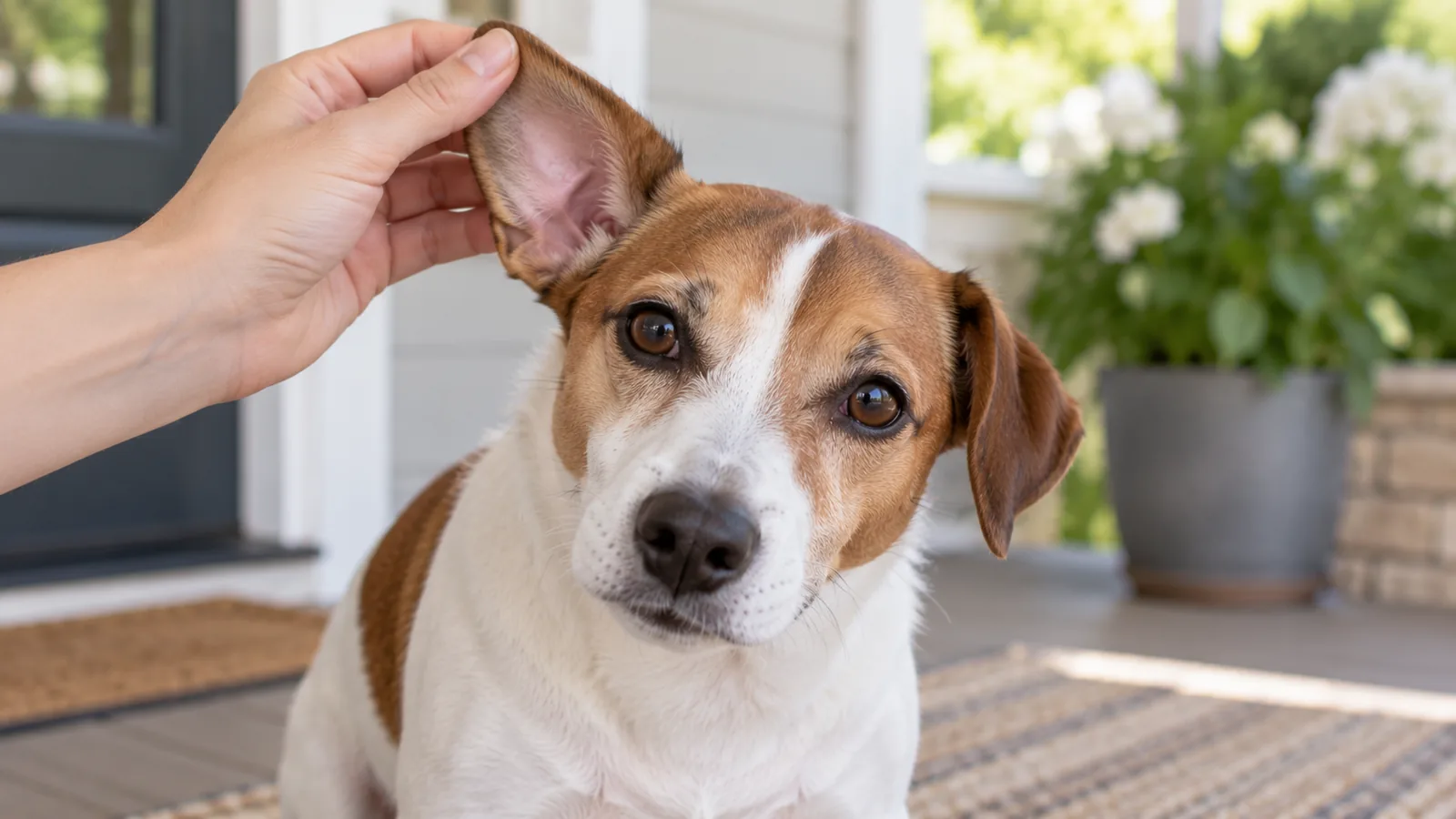
A weekly look and sniff is enough for most pets, and cleaning is only worth doing when there is wax or debris to remove. Dogs with floppy ears, swimmers, and pets with allergies need checking more often, sometimes a few times a week. Healthy ears are pale pink inside, dry to lightly waxy, and close to odorless, so redness, a sour smell, dark discharge, or flinching at a gentle touch tells you something has changed. Infections also move faster than most families expect, and a mild itch can turn into real pain in a day or two.
A sore ear is miserable, and you cannot tell from the outside how far down the trouble goes. At Memorial Villages Animal Hospital, we look into the canal, check the eardrum, and examine a sample under the microscope so we know whether yeast, bacteria, or a foreign object is behind it, because the treatment changes with the answer. Ear checks are part of the wellness care we provide in Houston, and because these infections hurt long before most pets let on, we treat the pain along with the cause. If your pet is shaking their head or pawing at an ear, book a visit so we can find out what is going on in there.
Ear Care Without the Guesswork
- A weekly lift of the ear flap and a quick sniff catches most trouble early, since healthy ears are pale pink, close to odorless, and comfortable to touch.
- Cleaning is only useful when there's something to remove, and flushing a healthy canal every few days does more harm than leaving it alone.
- Swelling, bleeding, real pain, or a head tilt calls for an exam rather than a bottle of cleaner, because rinsing an inflamed ear drives debris deeper.
- Ears that keep getting infected are usually pointing at something underneath, most often allergies, and treating that cause is what finally breaks the cycle.
Which Ear Signs Mean Your Pet Needs to Be Seen?
Head shaking, a sour smell, brown or yellow discharge, and a yelp when you touch the ear flap are the everyday signs of otitis externa, inflammation of the outer ear canal that becomes more painful and harder to clear the longer it runs. Redness, swelling, warmth, and an ear held flat belong on the same list.
Cats are quieter about all of it. A kitten who suddenly digs at one side, or a cat who wakes from a nap to shake her head, may be saying as much as the Labrador who thumps a back foot every time you rub the base of his ear. Rubbing an ear along the couch or carpet counts too.
Some of these can't wait. A head tilt, stumbling, blood in the discharge, or a pet who cries when your hand comes near their face needs to be looked at that day, and our team provides urgent care during our regular hours, Monday through Friday. Call ahead so we can have a room ready.
While you're waiting, leave the ear alone. Skip the leftover drops from last year, and never pour hydrogen peroxide or a human ear product into a painful ear, because on an eardrum that's already damaged those can do permanent harm.
What Should You Understand About Ear Anatomy and Common Problems?
Ear anatomy explains most common ear trouble: canals in dogs and cats take an L-shaped turn, trapping warmth and moisture. Most ear problems start with something structural or allergic: reduced airflow under a heavy ear flap, hair inside the canal that holds moisture, a narrow canal that packs wax against the eardrum, or an allergy that inflames the lining long before bacteria and yeast move in.
Those organisms already live on healthy skin in small numbers. They just need the conditions to tip.
Breed shifts the odds. Cocker Spaniels, Basset Hounds, and other heavy-flapped dogs run humid canals because the flap works like a lid. Poodles, Doodles, and Schnauzers grow hair down inside, which holds debris in place. Shar-Pei and English Bulldogs have tight canals that pack wax where it doesn't belong. Among cats, flat-faced breeds drain poorly, and any feline with environmental allergies can develop the same red, itchy lining a Golden Retriever does.
Allergies are the biggest driver in dogs by a wide margin, and an itchy ear is often the very first hint, sometimes months before the feet and belly start bothering them. In kittens, ear mites take the top spot. In a Houston backyard, a grass awn can slip into a canal on a Saturday and set off dramatic, one-sided head shaking by dinner.
How Often Should Ears Be Checked, and How Often Cleaned?
Weekly works for most pets: lift the flap, take a look, take a quick sniff, and put the bottle away if everything's pale pink and odorless. Cleaning is for ears that have something in them, which for many dogs means every few weeks, and for plenty of cats means almost never.
More cleaning isn't better care. Wax has a job, trapping debris and carrying it outward, and a canal that gets flushed every few days ends up dry, raw, and likelier to develop the infection the flushing was meant to prevent.
Which Pets Need Closer Watching?
| Your pet | Look and sniff | Clean |
| Healthy dog with upright ears | Weekly | Only when wax or debris is visible |
| Floppy-eared or hairy-eared dog | Two or three times a week | Every few weeks, or as we direct |
| Dog who swims or bathes often | After every swim | After water exposure, with a drying product |
| Dog with allergies or past infections | Several times a week | On the schedule we set together |
| Most cats | Weekly | Rarely, and only the visible part |
| Kitten or newly adopted cat | Weekly, watching for dark crumbly debris | Only after mites have been ruled out |
Seasonal allergies here run long, heavy ear flaps hold humidity, weekly swimmers reintroduce water faster than it evaporates, and a pet who had two infections last year is a pet we plan around rather than react to. For those histories we build the schedule from the record instead of a generic rule, and our in-house diagnostics and allergy management let us catch a flare while it's still an itch.
When Should the Cleaner Stay in the Cabinet?
Swelling, warmth, bleeding, crusting, or a pet who pulls away in pain all belong in the category of when not to clean ears at home, because flushing an inflamed canal pushes debris and infection deeper rather than out. Strong odor with discharge means the same thing: an exam, not a rinse.
A head tilt, circling, or sudden clumsiness points past the outer canal toward otitis media and interna, infection behind the eardrum where anything poured in from the outside can reach the hearing and balance structures directly. That's also how a quiet problem turns into a lasting one.
Here's the honest part: nobody can tell from across the room whether an eardrum is intact, and a torn one changes which products are safe. Schedule an exam before anything else goes into that ear.
What's the Safe Way to Clean Ears at Home?
Once we've looked and given you the go-ahead, the entire method for cleaning your dog's ears is quick and a little messy:
- Fill the canal with an approved cleaner
- Massage the base until you hear a soft squish
- Step back and let him shake
- Wipe away only what you can see with a cotton ball or soft pad
Set it up so it goes well. A quiet room, a non-slip surface, treats already in your hand, and a plan to stop while everyone's still happy. Never push a cotton swab down into the canal, no matter how steady your grip feels. If your dog ducks, freezes, or goes tense, end the session, hand over the treat anyway, and try a shorter version tomorrow.
Pairing ear handling with treats and keeping the first sessions to a few seconds is the whole idea behind cooperative care, and a puppy or kitten taught that way grows into a pet who leans into your hand instead of ducking away from it.
Cats play by different rules, and cleaning a cat's ears usually means a damp cotton pad on the visible part of the ear and nothing deeper, done rarely and stopped the second she says she is finished.
If the first attempt goes sideways, bring the bottle with you. Our veterinarians can show you the hold, the angle, and how much cleaner is enough in about five minutes at your next appointment.
Are All Ear Cleaners Safe to Use?
Ear cleaners aren't interchangeable, and the wrong one on an inflamed canal stings, burns, or reaches structures it should never touch. Which product is right depends on what's growing in there and whether the eardrum is whole, which is why we choose it after looking and running a swab rather than before.
What's Hiding in Over-the-Counter Ear Products?
Appealing labels do a lot of work on that shelf. "Natural" and "gentle" aren't regulated promises, and several of the most popular home remedies are the exact ingredients we spend the following week undoing.
| What's in the bottle | Why it causes trouble |
| Alcohol | Burns raw or ulcerated skin and dries out the canal lining |
| Hydrogen peroxide | Irritates the tissue it's meant to help and leaves dampness behind |
| Vinegar and homemade rinses | Sting inflamed skin, and there's no safe way to dose them at home |
| Essential oils, tea tree especially | Toxic to dogs and far more so to cats, even in small amounts |
| Anything made for people | Formulated for a straight human canal, not an L-shaped one |
If the eardrum is already torn, an unsafe product doesn't stop at the outer ear. That's the route to lasting damage and hearing loss, and it's the reason a bottle bought on a hunch is a real gamble.
What Does a Vet-Chosen Cleaner Do Differently?
Safe products sit close to the skin's own pH and use mild surfactants or drying agents that lift debris without stripping the protective wax layer. Whether a drying cleaner, an acidifying rinse, or a prescription medication is the right call comes down to ear cytology, a swab read under the microscope that shows whether yeast, cocci, rods, or mites are driving the irritation. We run those samples in our in-house lab, so ask us which cleaner fits your pet instead of guessing in an aisle.
What About Ears After a Swim or a Bath?
Removing water from ears after a swim is mostly a towel and a cotton ball at the opening, plus a veterinary drying solution for pets who are in the water every week, and never a swab pushed down toward the eardrum. Gulf Coast humidity keeps trapped water from drying on its own.
Baths deserve the same attention, since a handheld sprayer sends more water into a canal than a pool ever does. Tuck a dry cotton ball at the entrance before you start, take it out when you're done, and aim the rinse away from the head.
A few habits carry the rest. Lift heavy ear flaps for a minute after toweling so air reaches the opening, let a wet coat dry fully before the next swim, and consider a snug swim cap or ear band for the retriever who's in the bayou every weekend. Pets who develop an infection after two swims in a row aren't unlucky, they're telling you the canal needs help drying, and that's a conversation worth having before summer.
Why Do the Same Ears Keep Getting Infected?
A recurring infection is usually a symptom of something else: allergies at the top of the list, then a foreign object like a grass awn, a polyp growing inside a cat's canal, or a hormone disorder such as hypothyroidism or Cushing's disease. Clear the yeast and the cause remains, so the itch returns.
So what changes on a repeat offender? The recheck carries as much weight as the first visit. We swab again after treatment to confirm the canal is truly clear rather than just less itchy, take a full look at the eardrum once the swelling is down, and start working on whatever sits underneath.
Chronic ears hurt, and pain control belongs in the plan rather than at the end of it. Cold laser therapy can ease inflammation and swelling in a canal that's been sore for weeks, working alongside the medication that clears the organisms.
Most of these ears do settle down once the real driver is handled. Our wellness visits are also where we find the low-grade yeast that hasn't bothered your dog enough to show yet, which is a far easier week for everyone than the alternative.
Frequently Asked Questions About Ear Care in Pets
How Long Does an Ear Infection Take to Clear Up?
Most straightforward outer-ear infections feel better within a few days of starting treatment and resolve in roughly one to two weeks. Comfort returns faster than the infection does, though, and that gap is exactly where relapses begin. Finishing the full course and coming back for a recheck swab is what confirms the canal is clean, because stopping early leaves a small population behind that can regrow within weeks. Middle-ear and chronic cases take longer and need a closer follow-up plan.
My Dog's Ears Smell but Look Clean Inside. Is That Normal?
Odor usually beats visible discharge by several days. Yeast gives off a sweet, musty smell and bacteria a sharper sour one, and both can be brewing well down the canal while the part you can see still looks pink and tidy. Your nose is the most sensitive tool you have at home. If you're catching it from across the couch, bring your dog in for a swab before it becomes a painful, head-shaking week for both of you.
Do Indoor Cats Need Their Ears Checked?
Indoor cats get ear trouble too, just quieter versions of it. Mites often arrive with a new kitten and spread to the resident cat, polyps can grow inside the canal and cause a head tilt, and feline allergies inflame ears the same way canine ones do. A weekly peek takes about ten seconds. Dark, crumbly debris that looks like coffee grounds is the classic mite sign, and it needs a swab to confirm before any product goes in.
Let's Keep Those Ears Comfortable
Ear care gets simple once you know what you're looking at, and two quiet minutes a week is usually the whole job. Routine ear checks belong in the same visit where we weigh your pet and look at their teeth, so book a wellness appointment at Memorial Villages Animal Hospital and we'll go over what healthy looks and smells like on your particular dog or cat.