
A new shampoo can genuinely help your dog or cat's sensitive skin, but it works on the surface, not the source. A well-matched product does real work, lifting allergens off the coat, easing irritation, and helping a damaged barrier hold moisture. What no shampoo can do is turn off an itch driven from the inside by allergies, a flea bite reaction, or a hormonal condition. Used correctly, the right product usually brings calmer skin and less scratching within two or three weeks. When nothing changes after a fair trial, that result is information, and it points to something under the skin that needs a diagnosis rather than another bottle.
At Memorial Villages Animal Hospital in Houston, we start a sensitive-skin case at the cause and work outward. A thorough exam with skin scrapings and a flea comb rules parasites in or out, and our on-site laboratory runs the cytology that identifies the yeast or bacteria feeding a rash. From there we take the next step the pattern calls for, whether that is a strict flea and diet trial or bloodwork for a hormonal cause, and the skin care routine we recommend follows the diagnosis instead of a label. If your dog or cat keeps flaring no matter what you wash them with, book a visit.
What Actually Calms an Itchy Coat
- A sensitive-skinned pet is nearly always reacting to something specific, and naming it first saves you from working through a shelf of shampoos one bottle at a time.
- Ingredients matter more than brand names, and a medicated ingredient aimed at the wrong problem can leave skin drier than it started.
- Several popular home remedies backfire, including human shampoo, essential oils, vinegar rinses, and coconut oil.
- What happens between baths, meaning wipes, brushing, ear cleaning, and short nails, does more for a reactive coat than bath day by itself.
What's Really Behind Your Pet's Sensitive Skin?
Sensitive skin has two sources, and plenty of pets carry both at once. Something inside the body, like an allergy or a hormone imbalance, keeps the skin inflamed and quick to overreact. Something outside, like a fragrance or a detergent, irritates it on contact. One itch, two different fixes.
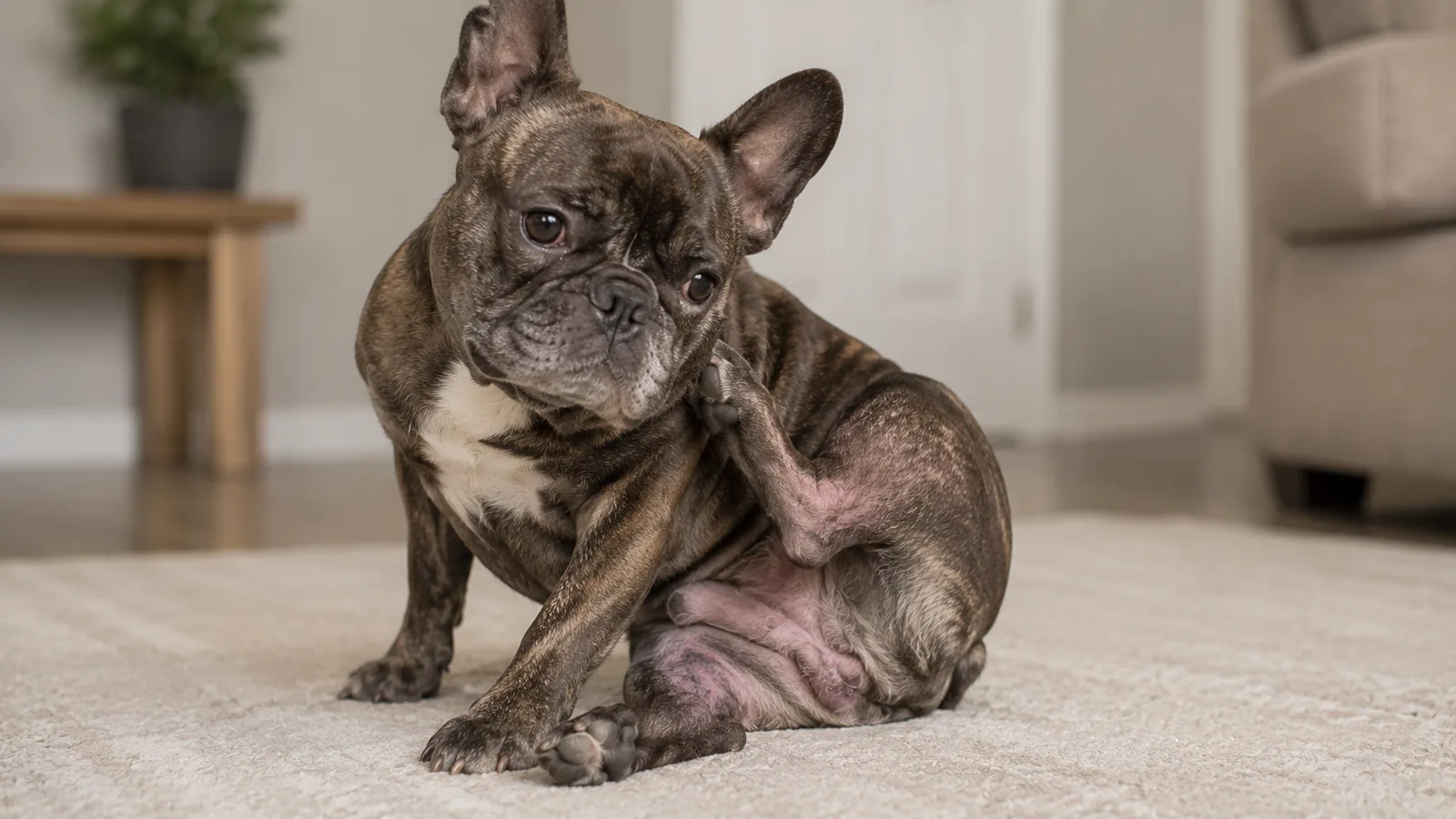
- Environmental allergies: Atopic dermatitis drives the itch from the inside, and pollen, dust mites, and mold usually announce themselves as face rubbing, paw licking, and a pink belly that flares in some seasons and settles in others.
- Food allergies: A protein the immune system has decided to fight shows up as year-round itching that ignores the pollen calendar, often with soft stool or repeat ear flare-ups alongside it.
- Flea allergy dermatitis: In a flea-allergic pet, a single bite can light up flea allergy dermatitis, which is why a dog or cat can chew at the tail base for weeks without a single flea ever turning up in the comb.
- Contagious look-alikes: Sarcoptes mites, ringworm, and Cheyletiella itch as hard as an allergy and spread to other pets and sometimes to people, so a scraping and a fungal culture come before any long-term allergy plan.
- Hormonal conditions: Low thyroid in dogs and excess cortisol both thin the coat evenly on both sides of the body, slow down healing, and invite the same infection back again and again.
- Contact irritants: Fragrances, laundry detergents, and grooming sprays tend to leave contact dermatitis on the least-furred places that meet a freshly washed blanket or a treated lawn first: the belly, groin, chin, and undersides of the paws.
How Can You Tell Sensitive Skin From Ordinary Itching?
Every pet scratches. Sensitive skin is the outsized reaction: a new shampoo, a walk through damp grass, or a switched laundry soap leaves your dog or cat scratching for days when most pets wouldn't have noticed a thing. The reaction is bigger than the trigger, and it keeps coming back.
- Itch that doesn't quit: Licking at paws until the fur stains rust-colored, rubbing the face along the carpet, or chewing at the tail base most days of the week.
- Coat and skin changes: Flaking, greasy patches, a musty smell that returns within days of a bath, or skin that turns pink and warm in the same few spots.
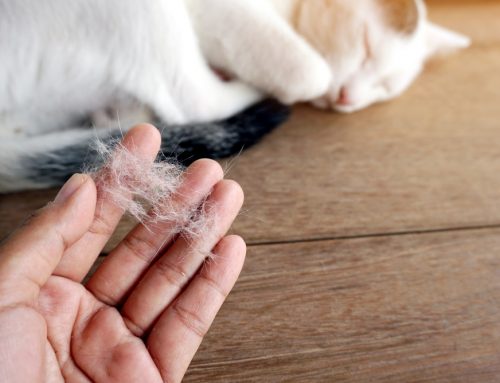
- Hair loss past normal shedding: The fur that collects on the couch every spring is normal, but hair loss that leaves defined bare patches, thin spots over the hips, or a suddenly sparse belly is a signal that something is irritating the skin underneath.
- Ears that keep relapsing: Head shaking, brown discharge, or an ear that smells wrong again a few weeks after it cleared.
- Flares that follow contact: Redness on the belly or chin a day after new bedding, a treated lawn, or a freshly mopped floor.
Cats hide all of this better. A cat with reactive skin often does the damage privately, so the first clue is a strip of thin fur along the belly or hairballs turning up more often than they used to.
What a Sensitive-Skin Workup Rules In and Out
Testing takes the guesswork out. Careful hands on the skin, backed by a few in-house samples, tells an allergy apart from parasites, a hormone imbalance, or a simple contact reaction, and each of those calls for a different plan. Sort that out first and the shampoo choice mostly makes itself.
| What we look at | What it rules in or out |
| Skin and ear cytology | The yeast or bacteria feeding a rash and driving the smell |
| Skin scrapings | Mites, including the kind that never show on a surface exam |
| Bloodwork | Thyroid trouble, cortisol problems, and organ function before any long-term medication |
| Elimination diet trial | Whether food is the driver, using one strict diet and nothing else for the full trial |
Skin cases wear everyone down, and the family living with the 2 a.m. scratching feels it most. Our in-house diagnostics keep that first round of answers in the same building where your pet was examined. The veterinarians reading those results are the same people who had their hands on the skin during the exam.
Which Shampoo Ingredients Do the Real Work?
The label matters more than the brand. A short list of ingredients carries nearly all the benefit, and they fall into two camps: soothing ingredients that support the barrier and suit most itchy pets, and medicated ingredients that work best with a diagnosis behind them.
| Ingredient | What it does | Who it suits |
| Colloidal oatmeal | Calms surface itch and helps hold moisture in | Most itchy pets, including puppies and kittens |
| Ceramides and fatty acids | Rebuild the barrier that lets skin stay hydrated | Dry, flaky, chronically inflamed skin |
| Aloe and glycerin | Pull moisture into the outer layer | Skin that feels tight and dry after a bath |
| Phytosphingosine | Supports the barrier and quiets low-grade inflammation | Allergic pets on a long-term plan |
| Chlorhexidine | Kills bacteria on the skin surface | Diagnosed bacterial infection |
| Miconazole or ketoconazole | Targets yeast | Diagnosed yeast overgrowth, often paired with chlorhexidine |
| Benzoyl peroxide | Flushes hair follicles and cuts grease | Greasy coats and deep follicular infection, and it's drying |
| Sulfur and salicylic acid | Lifts scale and flaking | Seborrhea and heavy dandruff |
Several of those, chlorhexidine and the antifungals especially, come in prescription strength. A medicated shampoo does nothing for the wrong problem, and benzoyl peroxide on skin that was only dry will leave it worse. Bring the bottle you're using, or a photo of the label, and ask us which shampoo matches the diagnosis instead of decoding ingredient lists on your own in the aisle.
Which Home Remedies Make Sensitive Skin Worse?
The gentlest-sounding fixes aren't always the gentlest on skin. Most of what circulates online as a kind, natural remedy was built for human skin, human pH, or human metabolism, and a reactive coat pays for the mismatch.
- Human and baby shampoo: Our skin is far more acidic than a dog's or cat's, so even the mildest baby formula sits at the wrong pH and strips the oils holding a fragile barrier together.
- Essential oils: A natural label does not make a product gentle, and essential oils such as tea tree, citrus, and pennyroyal sting already inflamed skin and can be genuinely poisonous to cats, who cannot break them down the way people can.
- Apple cider vinegar: It's an acid. On intact skin it does very little, and on a raw hot spot or an open scratch it burns.
- Old-style flea shampoos: Harsh, short-lived, and outdated next to a modern preventive that goes on protecting for weeks.
- Coconut oil: Nearly all of it is licked off within the hour, an upset stomach traded for zero effect on the itch.
Stop any product that stings going on or leaves your pet worse by morning: rinse with plain lukewarm water and check with us before trying another bottle. Skin that's raw, oozing, swelling, or painful to touch needs to be seen rather than washed again, and we handle urgent care during our regular hours.
How Should You Bathe a Dog or Cat With Sensitive Skin?
A good bath for sensitive skin is mostly about slowing down. Almost every problem families run into at the tub comes from rushing, and the fix is usually a few extra minutes rather than a different product.
- Brush first: Loose undercoat and small mats keep water and shampoo from ever reaching the skin, which is where the trouble lives.
- Keep the water lukewarm: Hot water feels soothing to us and reddens inflamed skin on a pet, on top of stripping oil the barrier needs.
- Work it in gently: Massage the lather down to skin level with your fingertips. Scrubbing at an itchy patch only adds damage.
- Respect contact time: Medicated formulas need roughly ten minutes against the skin to do their job, far longer than most home baths run.
- Rinse well past the point it feels finished: Leftover residue is one of the most common reasons a pet is itchier after a bath than before it.
- Dry the folds: Damp folds turn into skin infections, so heavy facial folds, tail folds, and armpits get a towel and a few extra minutes.
How often? Many sensitive-skin dogs land somewhere between weekly and monthly, most cats never need a full bath unless a medicated plan calls for one, and puppies and kittens do best with shorter, gentler washes than an adult coat. If flaking or scratching picks up in the days after a bath, the usual culprits are too many baths or a product that doesn't fit the diagnosis, and it's worth a call to schedule a skin recheck rather than switching bottles again.
What Keeps Skin Calm Between Baths?
Most of the real management happens between baths. Allergens land on the coat every day while the tub comes out once a week at most, so five minutes of wiping and brushing on an ordinary Tuesday does more than bath day alone ever will.
- Wipes for paws and folds: A quick wipe after a walk pulls off pollen that would otherwise get licked all evening. Deep facial folds on flat-faced breeds need wiping and drying daily, not weekly.
- Leave-on sprays and no-rinse mousses: These let you spot-treat a hot spot without a full bath. Medicated versions deliver real treatment, while the ones sold to freshen a coat only make it smell nicer.
- Ear cleaning on a schedule: Allergic pets are the ones who end up with repeat ear infections, since the same inflammation swells the ear canal and traps moisture, so a cleaner used on a set schedule beats one pulled out after the head shaking starts.
- Brushing: A few passes a week spread natural oils, lift dead hair, and keep mats from forming over skin you can't see.
- Short nails: Keeping up with nail trimming belongs on the sensitive-skin list too, because short, blunt nails do a fraction of the damage that long ones do every time a pet goes after an itchy spot.
None of it takes long. It just takes remembering, and if ear cleanings and nail trims keep sliding to the bottom of the list, we can get those visits on the calendar so they happen on a rhythm instead of after a problem starts.
Is a Professional Groomer Safe for Sensitive Skin?
A groomer can do right by sensitive skin, provided everyone is following one plan. Send the prescribed shampoo along, ask that the full contact time be honored instead of cut short, and have ear cleaning and a nail trim folded into the same appointment.
Regular grooming doubles as a head-to-tail health check, since the person working through the coat is the one who finds a new lump, a hot spot brewing under a mat, or an ear that smells wrong. Anything they flag is worth a look from us rather than a wait-and-see.
Tight mats deserve a specific warning. Never try to cut one out at home with scissors, because matted fur pulls the skin up into the mat and it's remarkably easy to cut through both. Clippers in trained hands take it off safely.
A medicated bath plan only helps if the baths happen, so we'll write the schedule down with you and adjust it as the skin settles.
Sensitive-Skin Grooming Questions Pet Families Ask Us Most
How often should I bathe my itchy dog?
Bathing frequency depends on the coat and the diagnosis more than on any general rule. A dog being treated for a yeast infection may need two medicated baths a week for a stretch, while a dog with mild seasonal allergies and a thick double coat often does better at once a month. Washing too often strips oils and feeds the itch, and washing too rarely lets allergens build back up. Ask us for a number that fits your dog, and expect it to change as the skin settles.
Can I use baby shampoo if I've run out?
Baby shampoo is gentle for a baby, and that's exactly the problem. Pet skin sits at a different pH, so human formulas strip protective oils a sensitive coat is already short on. One emergency bath won't cause lasting harm, but it tends to leave the skin drier and itchier a day or two later. Plain lukewarm water is the safer stopgap until you can get a product made for pets.
My dog got itchier after we switched shampoos. What now?
The first move is to stop the new product and rinse the coat with plain lukewarm water. A true reaction usually appears within a day as redness, bumps, or a fresh burst of scratching on the belly and other thin-furred areas, and that's worth a look rather than a wait. Bring the bottle with you. Knowing which ingredient set it off narrows the next choice considerably, and it sometimes uncovers a contact sensitivity nobody suspected.
Calmer Skin Comes From a Plan, Not a New Bottle
Sensitive skin rewards patience more than it rewards any single miracle product. Find the cause, match the ingredients to it, keep up the small habits between baths, and most flare-ups loosen their grip.
If the itch keeps winning at your house, you're not stuck sorting it out by yourself. Reach out to us at Memorial Villages Animal Hospital in Houston, and we'll examine the skin, look for what's driving it, and build a bathing and grooming routine your dog or cat can live with.